
Mango Print Story
A print bigger than life.


up close and delicious
mango
There are 1000 mango varieties in the naked city. This is just one of them.
inspiration
The skin of the mango, protecting its bounty, is ugly and beautiful at the same time. There are a lot of colors in the mango skin as it ripens. Lots of imperfections. Freckles and blemishes like human skin.
What happens when you illustrate a humble fruit at a monumental scale? Do you gain a fresh appreciation for it? Does it become like a Claus Oldenberg scuIpture? Growing up I had pile of labels for cans from the 1940s. They all picture perfect illustrations of fruits or vegetables. I liked how the fruit was captured in the offset printing, limiting the colors and the textures.

mango
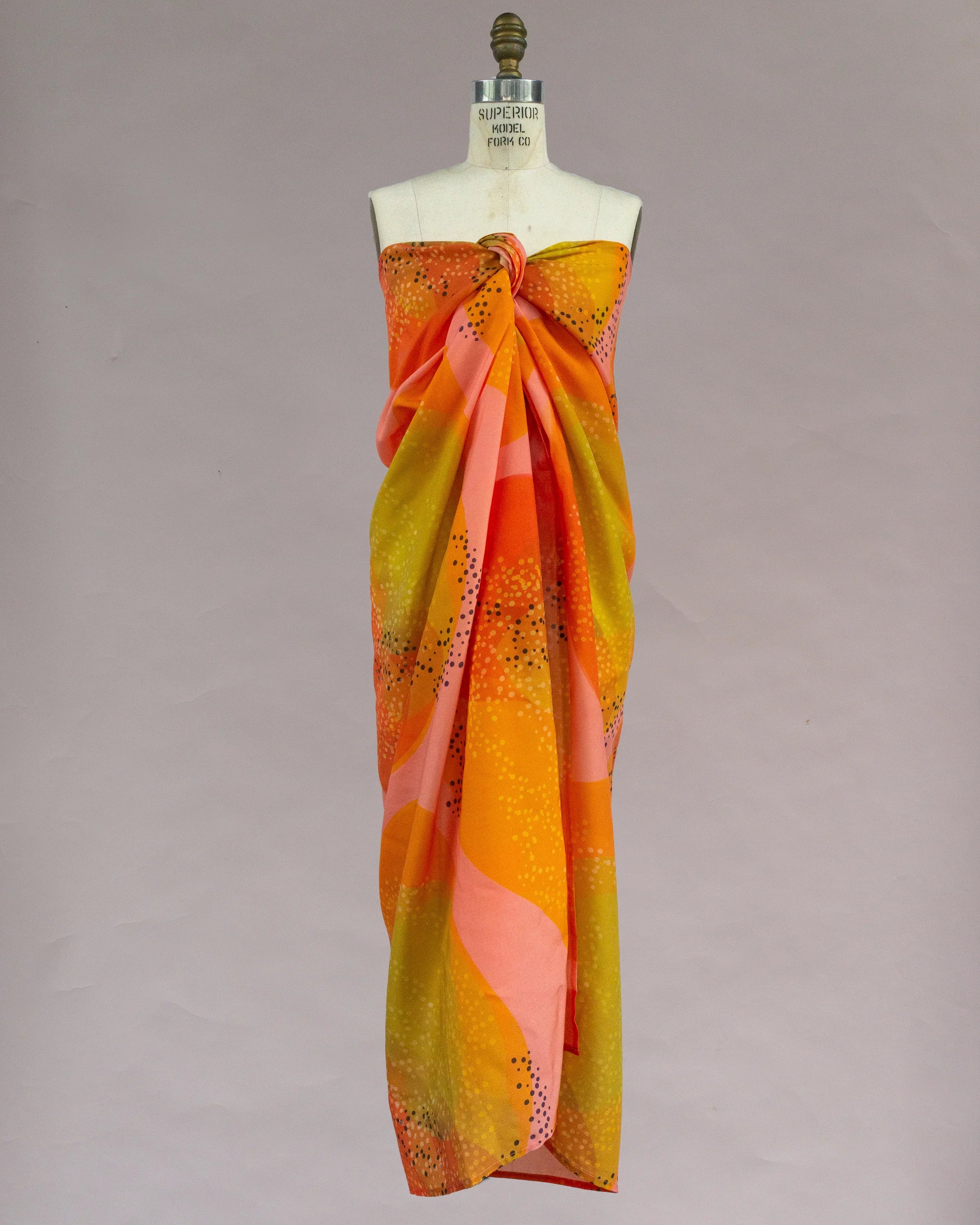
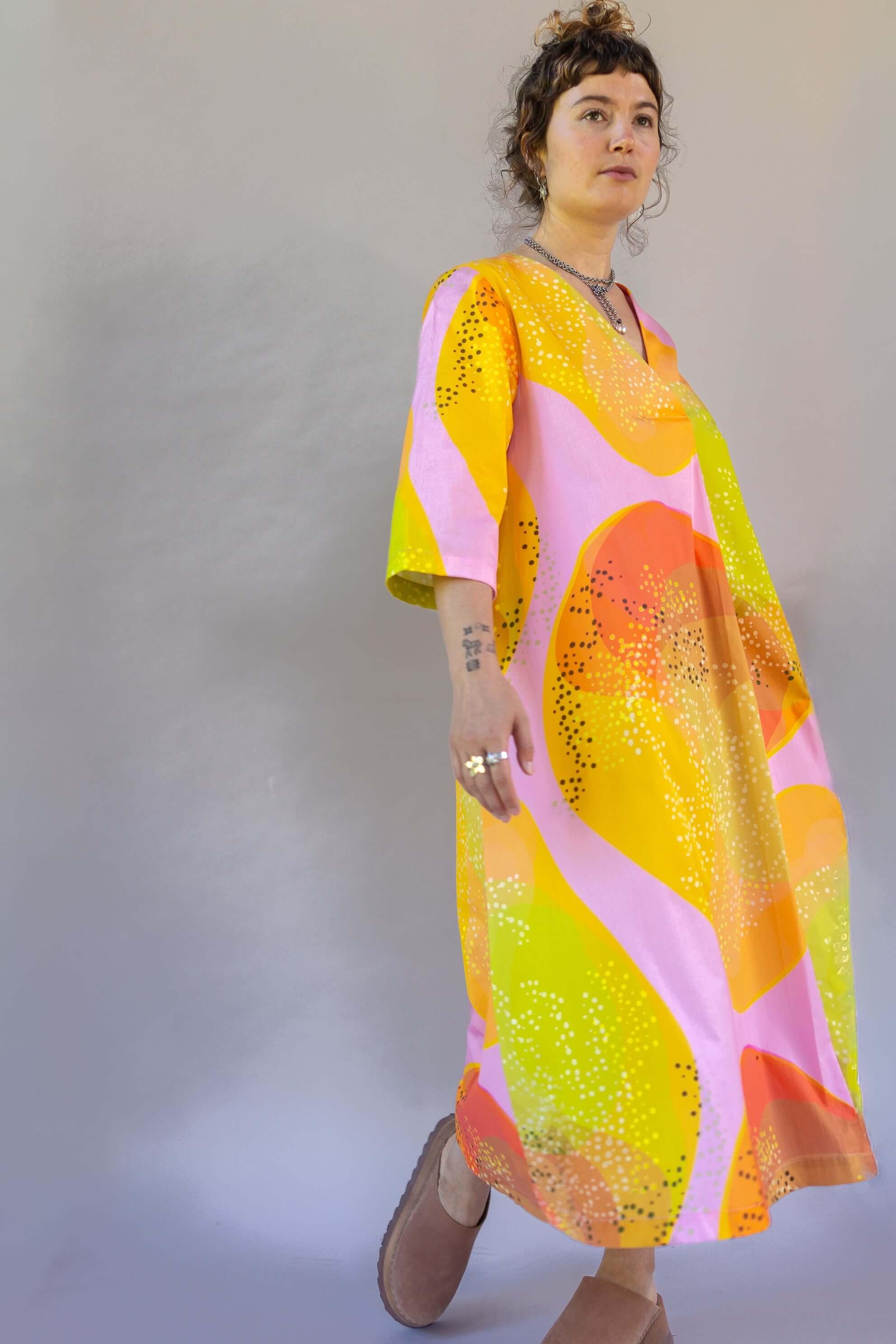
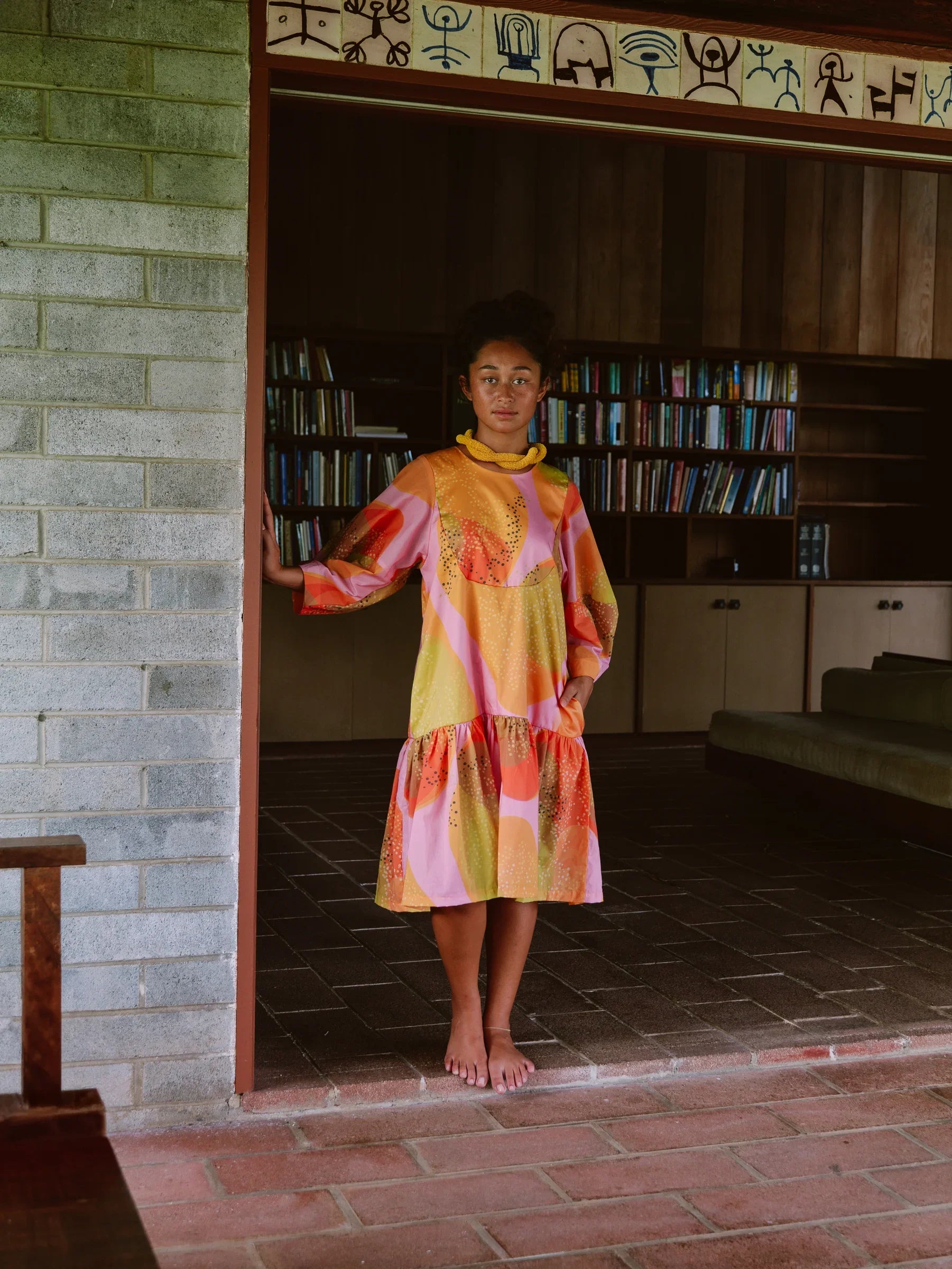


our process
Our prints are concept driven and development may span several years. We build hardworking repeats and take no design shortcuts. We love prints and print history and embrace a research heavy, somewhat academic process.
in the wild


all our prints
mango

rainbow

sunrise

1961

disco

westbeth
and now...
some history

why are the prints so big?
Large scale prints are integral to muʻumuʻu and all aloha wear. How did this happen? There are a lot of apocryphal origin stories. One we particularly like is that Wong’s Drapery Shoppe helped create the aloha shirt for college bound Hawaiians going to the mainland. The students needed something both warm and that felt Hawaiian. Wong’s initially used thick Japanese upholstery fabric for the warmth so the large print scale became locked in as “Hawaiian.”
These prints represent the multicultural history of Hawaiʻi. They may refer to Japanese Kimono fabrics, European chintz florals, Indian paisleys, Indonesian batiks, and traditional kapa patterns. They may be designed “authentically” by a native Hawaiian, a kamaʻāina (a local), or a transplant to the islands. The authenticity comes from the knowledge, sense, and respect of place.
Elsie Das
In the 1930s and 40s there was a concerted effort to create the modern Hawaiian print using local themes. This has been much lauded in Alfred Shaheen’s work. Also consider Elsie Das. Elsie Das was an American of Danish descent who went to art school in California. In 1950, the Honolulu Advertiser wrote “Elsie Das can lay close claim to being the originator of the aloha print.”
Her approach to print shows a sophistication and a worldliness at odds with the stereotypes about “isolated” Hawaiʻi. Compare her ulu print with the great 20th century print designer Josef Frank. The similarities indicate a deep understanding of print design and trends at the time.

Left: Elsie Das “Breadfruit,” Right: Josef Frank “Hawaii”
For more read: The Aloha Shirt: Spirit of the Islands, Dale Hope and Elsie Jensen Das, Peter Young.